


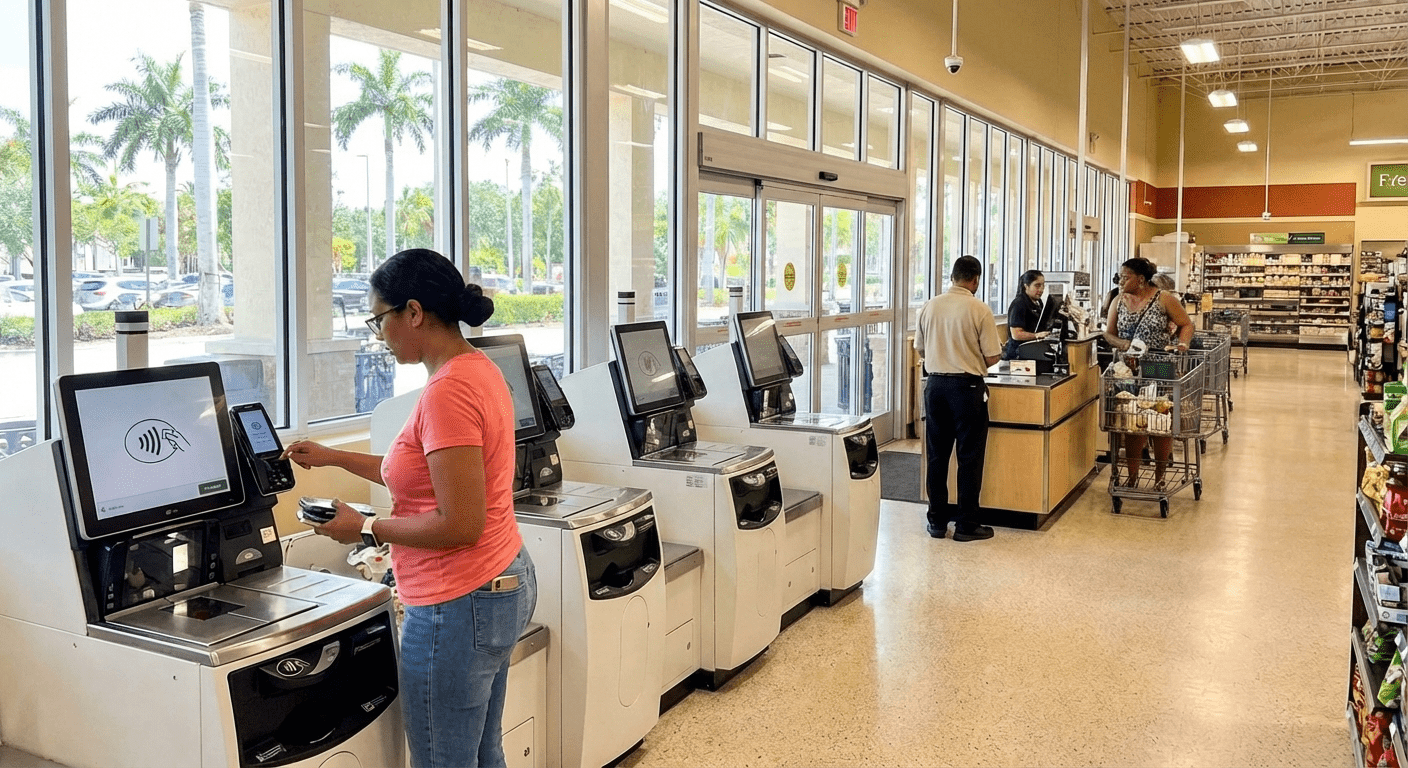
By using our website, you agree to the use of cookies as described in our Cookie Policy
Are Contactless Checkout Systems in South Florida Helping Reduce Wait Times?
Most retailers think contactless checkout is just about convenience. Tap, scan, done. But there's more happening beneath the surface — and if you're not paying attention, you're missing the real shift. These systems aren't just changing how customers pay. They're reshaping traffic flow, staffing models, and what people expect when they walk through your doors. Especially in South Florida, where speed matters and patience runs thin.
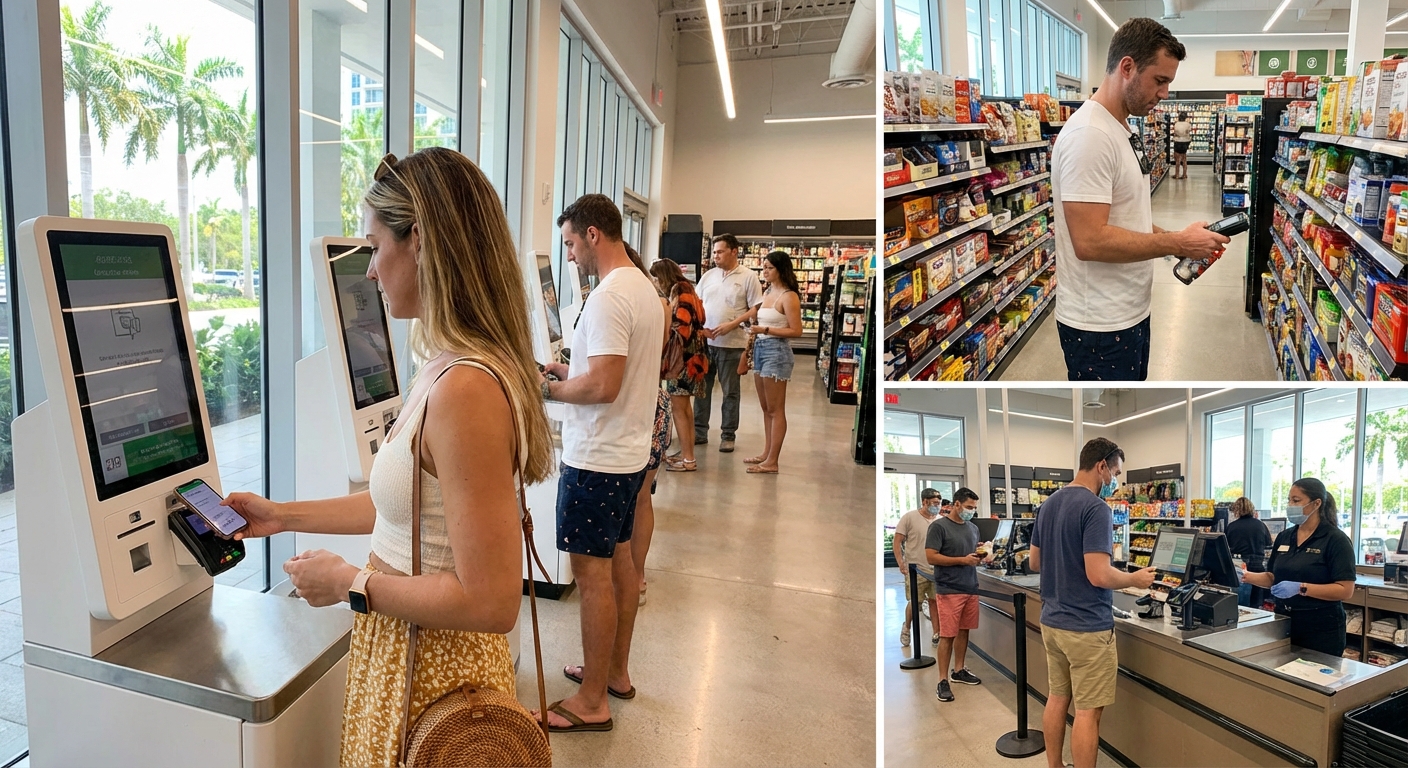
So here's what's actually going on. If you're rolling out contactless tech to keep lines moving, that's smart. Just don't assume the hardware does the work for you. Every system needs backup. Every customer needs a clear path. And every decision about checkout should be grounded in how people actually shop — not just how slick the demo looked.
The Tech That's Changing South Florida Retail
Walk into any major grocery chain between Miami and West Palm Beach, and you'll see it. Self-scan kiosks. Mobile wallet prompts. Entire aisles designed around getting people out faster. Contactless checkout isn't experimental anymore — it's standard operating procedure. Retailers are betting that speed wins loyalty, and in a market this competitive, they're probably right.
The backbone is simple enough. RFID tags, NFC readers, QR codes tied to apps. Customers grab what they need, scan as they go, and settle up without ever standing in a traditional line. Some stores have gone further, testing cashierless models where cameras and sensors track purchases automatically. It's not science fiction. It's Tuesday afternoon in Brickell.
Where the Time Savings Actually Show Up
The promise is obvious. Fewer bottlenecks. More throughput. Happier customers. And in high-volume locations, the data backs it up. Stores report shorter average transaction times and fewer abandoned carts during rush hours. When you let twenty people check out at once instead of funneling them through four lanes, the math works.
But the real win isn't just speed. It's flexibility. Contactless systems let you redistribute staff to where they're needed — restocking shelves, answering questions, handling exceptions. That means the people who do need help get it faster, while everyone else breezes through on their own terms.
- Self-checkout kiosks handle routine purchases without tying up cashiers
- Mobile payment options cut transaction time to seconds, not minutes
- App-based scanning lets customers track totals and skip the register entirely
- Tap-to-pay cards eliminate fumbling for cash or signing receipts
- Automated systems free up staff for customer service instead of ringing up items
When the System Breaks Down
Want faster checkout? You'll need to prove the tech actually works — and that your customers know how to use it. Not everyone does. Older shoppers, tourists, anyone unfamiliar with the interface can get stuck. And when they do, the line behind them grows just as fast as it would at a traditional register.
Then there's the technical side. A glitchy scanner or a payment terminal that won't connect can turn your efficiency play into a customer service nightmare. South Florida retailers have learned this the hard way. The stores that succeed keep staff nearby to troubleshoot and maintain a hybrid model — some lanes automated, some staffed, all monitored.
- System outages can halt checkout entirely if there's no backup plan
- Customers unfamiliar with the tech may need more time, not less
- Item scanning errors require manual intervention, slowing the process
- Age verification for restricted products still demands staff involvement
- Connectivity issues with mobile wallets can stall transactions mid-payment
What Shoppers Are Actually Saying
Feedback from South Florida customers splits along predictable lines. Younger, tech-savvy shoppers love the speed. They're in, out, and back to their day without waiting. For them, contactless checkout is a no-brainer. But there's another segment — people who value interaction, who want to ask questions, who don't trust a machine to ring up their produce correctly. They're not wrong, and they're not going away.
Smart retailers don't force the issue. They offer both. You want to scan your own groceries? Great. You want a cashier? Also great. The key is making sure neither option feels like a penalty. When contactless checkout works, it's invisible. When it doesn't, it's the only thing people remember.
- Frequent shoppers appreciate the ability to skip lines during peak hours
- Tourists and occasional visitors often struggle with unfamiliar systems
- Customers with large or complex orders still prefer staffed lanes
- Privacy-conscious shoppers worry about data tracking in automated systems
- Accessibility remains a concern for those with disabilities or limited mobility
The Staffing Equation Nobody Talks About
Here's the part most coverage skips. Contactless checkout doesn't eliminate labor — it shifts it. You still need people on the floor. They're just doing different work. Monitoring kiosks. Assisting confused customers. Handling exceptions. Restocking faster because checkout isn't the chokepoint anymore.
Some retailers use the savings to improve wages or invest in training. Others just cut headcount and hope the tech compensates. Guess which approach leads to better customer experiences? The stores that treat contactless as a tool, not a replacement, are the ones where wait times actually drop and satisfaction climbs.
- Staff can focus on high-value tasks instead of repetitive scanning
- Monitoring multiple self-checkout stations requires fewer employees than traditional lanes
- Training costs increase as workers need to troubleshoot tech issues
- Customer service roles become more important when automation handles transactions
- Labor savings only materialize if the system runs smoothly and customers adapt quickly
What Comes Next for South Florida Retail
The trajectory is clear. More automation. Smarter systems. Fewer friction points between wanting something and walking out with it. AI-powered cameras that recognize products without scanning. Carts that tally your total as you shop. Stores where checkout doesn't exist because the system already knows what you took.
South Florida is positioned to lead this shift. High population density. Tech-forward demographics. Competitive retail environment. The stores that figure out how to blend speed with service will own the next decade. The ones that just bolt on kiosks and hope for the best? They'll be the cautionary tales.
Contactless checkout isn't a magic fix. It's a tool that works when it's implemented right, supported properly, and paired with people who understand that technology serves customers — not the other way around. The wait times are dropping. The question is whether retailers can keep up with what customers expect next. Modern point of sale systems integrate seamlessly with mobile payments to create faster checkout experiences. Businesses implementing retail credit card processing solutions benefit from reduced transaction times and improved customer satisfaction. Advanced payment solutions now support contactless technology alongside traditional methods. Retailers exploring online sales e-commerce integration can extend the same speed advantages to digital channels. Protecting these systems requires robust fraud prevention measures to maintain customer trust and operational security.
Let’s Streamline Your Checkout Experience Together
We know that every second counts for your customers and your business. If you’re ready to make checkout faster, smoother, and more reliable, let’s talk about the right contactless solutions for your store. Call us at 866-944-3244 or contact us today to get started on transforming your retail operations.
‹ Back